31 August 2018

No great loss

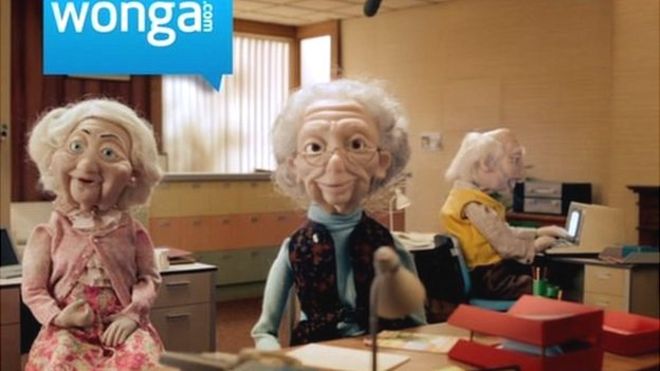
Wonga UK advert


For once, government policy has succeeded.  The Guardian reports:
Wonga, the payday lender that became notorious for its extortionate interest rates and was a toxic symbol of Britain’s household debt crisis, has collapsed into administration after it was brought down by a welter of compensation claims.
...
Wonga, known for controversial adverts featuring puppet grandparents, has been condemned over the years by campaigners for “legal loan sharking” and targeting vulnerable borrowers with small loans which quickly spiralled out of control. At one point customers faced interest rates as high as 5,853%, before they were capped by ministers in 2015 and now stand at about 1,500%.
They will not be mourned.


29 August 2018

Quote of the day

From The Times (here):
If you managed to watch the news yesterday without screaming, “No, make it stop,” then you are hardier than me. That footage of Theresa May dancing with schoolchildren in Cape Town with all the rhythm of a mechanical wheelie bin did not make for easy or forgettable viewing.
Why do politicians put themselves through this? Why do May’s advisers let it happen when they know she’ll wear that smiling-through-the-pain expression of a constipated giraffe and the result will be instant ridicule? It’s cruel.


Update:  The Guardian's take:
It’s that thing where public figures – politicians mostly, sometimes the royals – have to dance. In public.
Oh God. That is worse. It’s worse even than that. This time it was Theresa May.
Oh, that poor woman. I know. A group of Cape Town schoolchildren welcomed her on the first day of her trade trip to Africa and …
Oh, that poor woman. Yes. She found it incumbent upon her to – well, I was going to say move to the rhythm, but she didn’t, so I can’t.
Bust out some moves? It was more like … do an impression of a wobbly fridge.
In front of the world’s press? Yeah.


27 August 2018

Complacency rules, OK?

So why are the people not revolting over that state of the Brexit negotiations?  The Guardian suggests:
Before heading off for his summer break Mark Carney said the risks of a no-deal Brexit were uncomfortably high. Last week Philip Hammond warned the Treasury would take an £80bn hit if negotiations between Britain and the EU failed completely.
There is a risk to this latest manifestation of Project Fear. If the public really thinks that in eight months’ time Britain is going to be plunged into the economic equivalent of a nuclear winter, the economy will take a serious hit.
So far, though, people seem relatively relaxed and haven’t spent the bank holiday weekend stripping supermarket shelves of baked beans and bottled water. While opinion polls show that voters think – rightly – that the government is making a pig’s ear of the Brexit negotiations, the state of the economy suggests they are taking what Carney and Hammond say with a pinch of salt.
If the people seem relaxed, it is more than likely because of the sheer complexity of the issues associated with Brexit.   Even nerds like me find it hard enough to keep up with the state of play.  I suspect that, for most, the question has become a complete turn-off.

The one thing of which I am certain is that - whatever the outcome - it will end in tears ...


25 August 2018

Marital relations


From Trump's diary (here):
Friday
In one of the corridors of the West Wing, I bump into my wife. Who is hotter than your wife. I mean, I haven’t seen your wife, but I’m guessing. She’s definitely the hottest wife I’ve had so far.
“Oh hey!” I say. “I haven’t seen you in ages. Where do you even sleep?”
“Ferry busy,” says Melania, sullenly. “Was launching campaign against nasty cyberbullying on social media. Did see?”
I tell her I did, and it was amazing, and how does she even think of that stuff? And she rolls her eyes.
“Husband,” she says. “Is true you haff paid glamorous women money to go away forever?”
“Honey,” I say. “Would I?”
Melania shrugs.“Am hoping,” she says.


21 August 2018

Lies and consequences

Measles is back to haunt us.  The Guardian reports:
A huge surge in measles cases across Europe has been reported by the World Health Organisation, which says low MMR vaccination rates are to blame.
More than 41,000 cases of measles have been reported in the European region between January and June. Last year there were nearly 24,000 for the whole 12 months, which was the highest count in any year of the last decade.
...
In seven countries (France, Georgia, Greece, Italy, the Russian Federation, Serbia and Ukraine) more than 1,000 children and adults have been infected in the first half of 2018 and at least 37 people have died. The biggest toll was in the Ukraine, which had 23,000 cases – half the European total. There were measles-related deaths in all seven countries. Serbia, with 14, had the most.
Two countries that had eliminated measles had outbreaks that continued for 12 months. The measles status of Germany and Russia has been reclassified by the WHO to endemic as a result. The outbreak in Germany began in Duisburg in early 2017 and spread to other cities.
This could have been avoided.  But for this guy:
Confidence in the MMR (measles, mumps and rubella) jab slumped after the gastroenterologist Andrew Wakefield at the Royal Free hospital in London published a paper in the Lancet in 1998 wrongly alleging a link between the vaccine and autism. The paper was retracted and Wakefield, who had not declared he was taking money from solicitors hoping to pursue vaccine damage cases, was struck off the medical register for dishonesty and irresponsibility.
  

20 August 2018

Be glad you don't live in Venezuela

The Times reports:
Venezuela is experiencing runaway inflation in an economy where the government, which insists inflation is “induced” by its enemies, still believes that it can control prices. In most cases it fails; the majority of products are sold at market rates, which is one reason why most Venezuelans say they have lost weight over the past 12 months. But there are a few prices that the government does successfully control, and that creates ludicrous distortions. The most notorious is petrol: one litre now costs a fraction of a British penny. Domestic airline prices are regulated but taxi fares are not, so a 40-minute ride to the airport costs three times more than an air ticket to any city in Venezuela (about £1.50). However, because airlines have to sell their tickets at such unrealistic prices, yet still have to buy spare parts in dollars, only 20 planes out of the national fleet of 100 are flying. So Venezuela can boast the world’s cheapest air tickets — but there are hardly any available.
The minimum wage has failed to keep up with inflation. Despite four rises this year alone, it has slipped in real terms to the equivalent of £1 a month. An egg costs more than one day’s wage, prompting Venezuelans, whose sardonic humour is helping many to endure this catastrophe, to observe that a hen earns more than a teacher.
   

19 August 2018

Is he for real?


Warm congrats to The Bay Chippie.  The Observer reports:
Stonehaven, the newly crowned home of the world’s finest fish supper experience, is also a globally acclaimed hothouse of gastronomic innovation.
...
The Bay fish and chip shop, overlooking a handsome little North Sea inlet, appears at the top of the UK’s entries in the Lonely Planet’s new collection of the world’s best food experiences.
...
Only the queue, 20-strong and beginning at the door, hints that you have entered the tabernacle of fish suppers; the Buckingham Palace of battered comestibles. For £7.30 a pop for its standard cod and chips, much is expected, and the Bay’s battered repast doesn’t disappoint. You will not encounter a better souper de poisson than the Bay’s.
Cod?  For a reporter who likes to dwell on his Scottish couthiness, it is upsetting to hear that he favours cod.  Like any other good Scot, haddock is the only fish I could possibly buy in a chippie.


Cod
Image result for cod


Haddock
Image result for haddock


Life will go on, maybe


11 August 2018

Music of the week


And what it means:


Amazon tax

So the Chancellor wants to impose an Amazon tax on online sales.

Far from sure why I should have to pay extra when ordering goods from Amazon
(i)  in order to ensure the survival of a bunch of outdated department stores which lost touch with their customers years ago; and
(ii)  because the system of business rates has been manifestly broken for years and successive governments have refused to do anything about it.
   

10 August 2018

So farewell to Binns

Exterior view of Binns West End Edinburgh, Princes Street

The Guardian reports:
House of Fraser is appointing administrators, putting more than 17,000 jobs at risk, after attempts to agree a rescue deal failed.
The department store chain said talks with its investors and creditors had “not concluded in a solvent solution”. The administration is due to be arranged at a court hearing early on Friday morning.
I do not know if youngsters today maintain the tradition, but 50 years ago the Binns corner was where, by appointment, a young man met his inamorata for the evening.

Been there. done that, but no t-shirts in those days ...


Rip-off

It's all take, and no give.  You might have thought that well-paid bankers would show a little sympathy for their savers, if only for competitive reasons.  But no, the banks are impervious to the need for public relations if it hits them in the pocket.  They like to say no.

The Times reports:
Only one of 100 banks and building societies has passed on last week’s interest rate rise in full to all its savers, prompting anger from MPs and campaigners.
The Bank of England raised the base rate for only the second time in a decade — by a quarter percentage point to 0.75 per cent.
HSBC and Barclays, two of the five biggest banks, have already increased the cost of mortgages by the full rate rise but have left savers without any benefit. Lloyds is to follow suit on September 1. The banks’ approach is likely to make them tens of millions of pounds in profits. The Royal Bank of Scotland estimated that the base-rate rise would add £300 million to its income projections by 2020.

Remuneration of bank chief executives:

Jes Staley, Barclays    £3.8 million
Antonio Horta-Osorio, Lloyds      £6.4 million
Joe Garner, Nationwide     £2.3 million
Stuart Gulliver, HSBC    over £6 million
Ross McEwan, RBS      £3.5 million
Paul Pester, TSB     £1.8 million

Source: here


09 August 2018

Quote of the day

Re burqas and such.  From The Guardian (here):
Boris Johnson’s inalienable right to make hostile remarks was defended this week, as ever, by the assertion that, however crass he is, he can’t be shut down, because we need to “start the debate”. In fact, we do not need Johnson and his cavalier debasement of the public sphere for this debate: we could start and finish it in two minutes. Do we want to police what women wear? No. Do women in burqas pose a significant crime risk? No. Does it matter what they do in France or Denmark, where feminism and race intersect in culturally idiosyncratic ways that we couldn’t emulate even if we wanted to? Not really, no. There, done.
Sorted.
  

Nominative determinism

So Chelsea FC have signed a keeper named Kepa.


31 July 2018

Education, education, education

I hope that this is not simply an excuse to blame the parents.  From The Guardian (here):
More than a quarter of children starting primary school are unable to communicate in full sentences as concerns grow about the amount of time they are spending in front of screens, the education secretary will say in his first major speech on social mobility.
Damian Hinds is expected to say on Tuesday that he wants to harness technology so parents can do more to help their children’s early language development.
The education secretary promised to halve within a decade the number of children lacking the required level of early speaking or reading skills. His department’s figures show that 28% of four- and five-year-olds do not meet communication and literacy levels expected by the end of the reception year.
“It is a persistent scandal that we have children starting school not able to communicate in full sentences, not able to read simple words,” Hinds will say. “This matters, because when you’re behind from the start you rarely catch up. Your peers don’t wait, the gap just widens. This has a huge impact on social mobility.”
A number of questions are being begged here:

1.  What percentage of children are expected to meet the required communication and literacy levels?  There will always be a proportion of kids who fail to meet expectations.  Is it now better or worse than it used to be?  How does it compare with international analogues?

2.  Are the expected communications and literacy standards set at the appropriate levels?  Who determines these?

3.  To what extent are schools expected to remedy alleged deficiencies in the children for which they become responsible?  How successfully are they achieving this?

I applaud the Minister's recognition of the need to improve children's speaking and reading skills but he needs to recognise the complexities of policies in this area.


26 July 2018

Peace in our time?


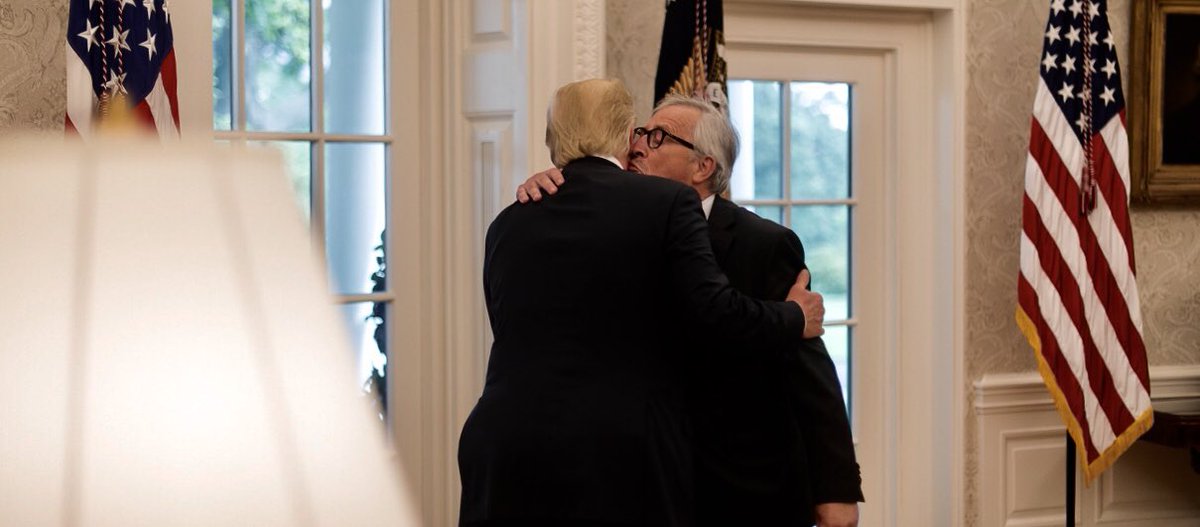
Improbably, Trump and Juncker seem to have found common ground.  Politico reports:
Trump said the United States will pause its plans to impose new tariffs against the European Union and work to resolve existing differences over trade in an attempt to avoid a full-blown trade war.
The announcement appeared to have been slapped together at the last minute.
...
Planned or not, the statement had the short-term effect of easing tensions between the United States and Europe, and the news of an agreement on trade sent stock prices soaring.
 It is entirely possible, of course, that Trump may reverse himself tomorrow but so far so good.

(The matter of US-produced soybeans may be a stumbling block.)


25 July 2018

"I couldn't possibly comment"

Good to see that the original House of Cards (far superior to the American version) is being repeated on the BBC i-player (here).

This is a trailer: